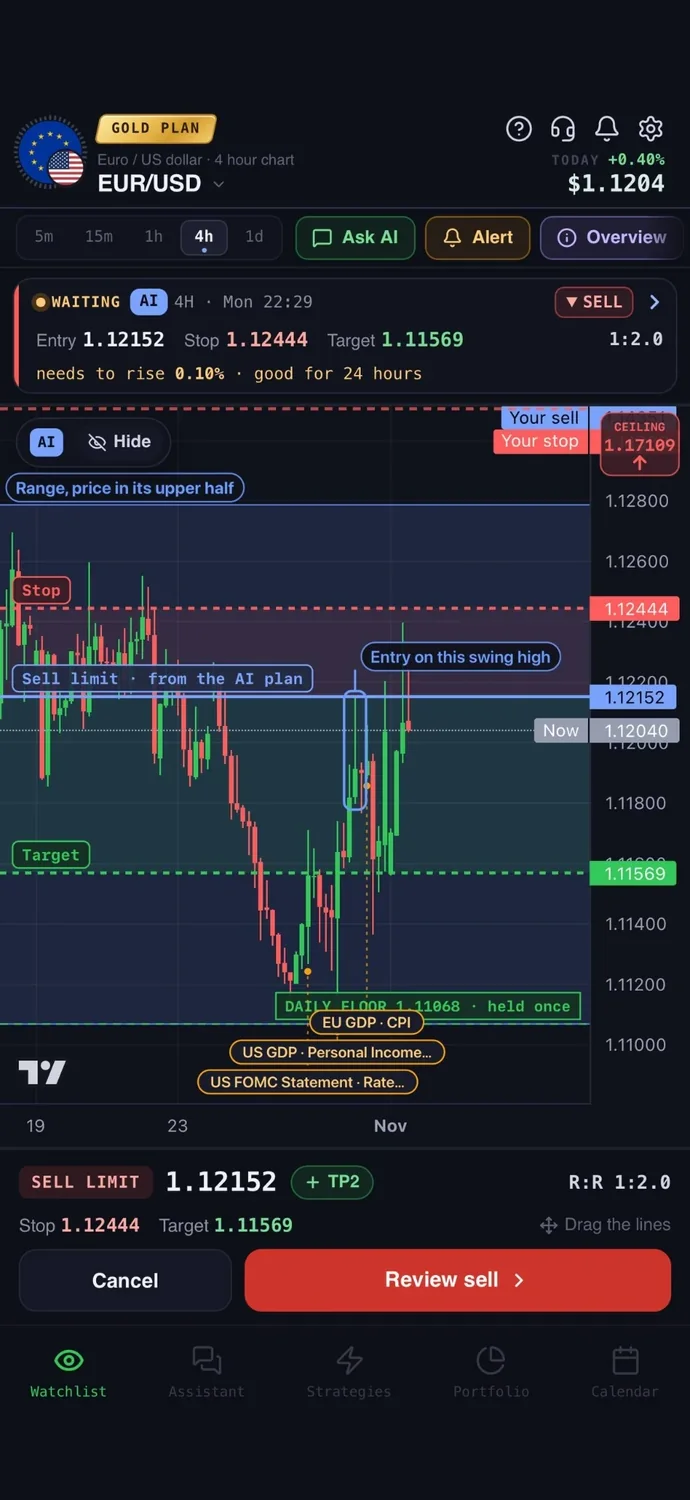
Stop loss vs stop limit comes down to one trade-off. A stop loss (also called a stop market order) becomes a market order when your price is hit, so it gets you out but can fill worse than planned. A stop limit becomes a limit order, so it never fills worse than your limit, but it may not fill at all.
Stop loss vs stop limit: the short answer
Both orders wait until price reaches a level you choose, the stop price or trigger. What happens next is the difference.
| Stop loss (stop market) | Stop limit | |
|---|---|---|
| What you set | One price: the stop | Two prices: the stop and the limit |
| When the stop is hit | Becomes a market order | Becomes a limit order |
| Will it fill? | Almost always | Only at your limit or better |
| Main risk | Slippage in fast markets or gaps | Not getting out while price keeps moving |
| Best for | Protecting an open position | Entries |
How a stop loss order works
Once price trades at or through your stop, a stop loss sends a market order: fill me now at the best available price.
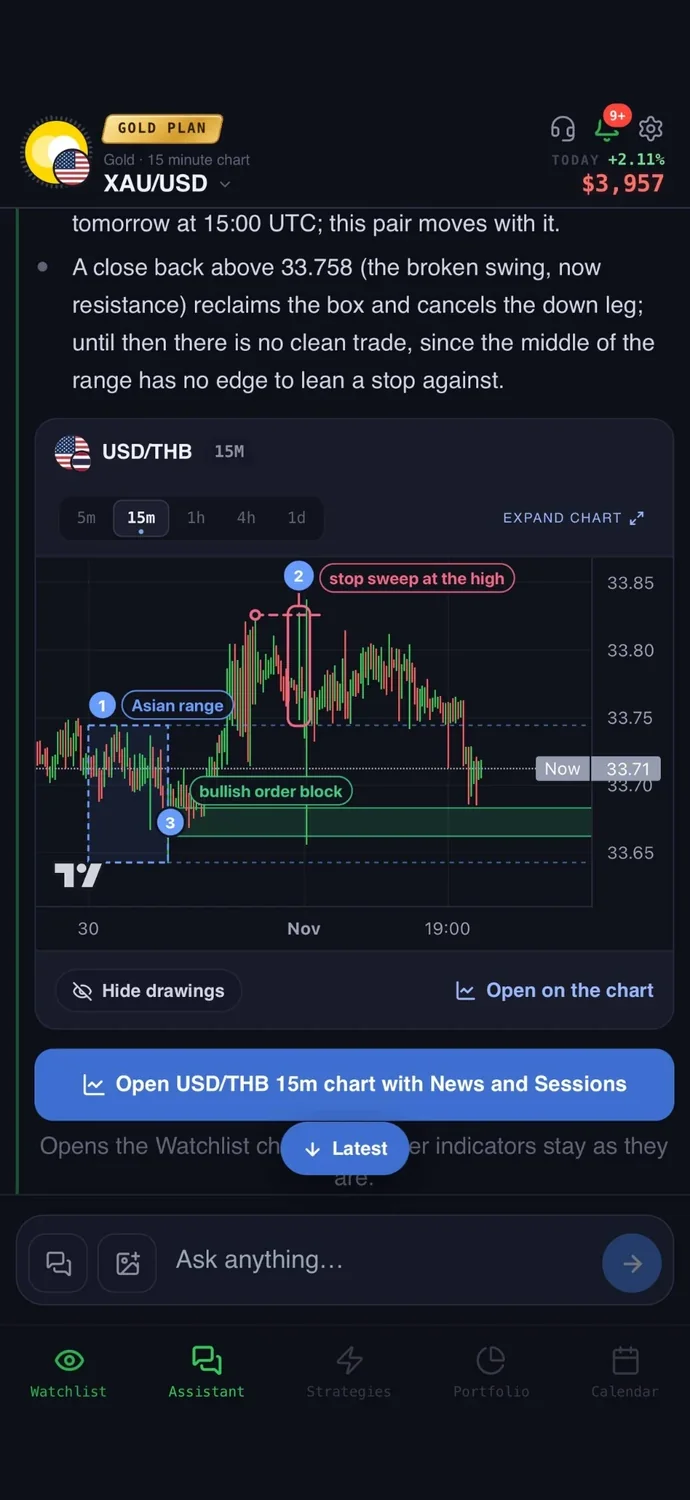
Say you buy a stock at 100 with a sell stop at 95. In a calm market you fill near 95. In a fast one the next buyer might be at 94.50. That difference is slippage. Protective stops on MetaTrader 5 and cTrader work this way.
The weak spot is a gap: price jumps between levels with no trading in between, as over forex weekends, overnight on stocks and around major news. If the stock closes at 97 and opens at 88, your stop fills near 88. You planned to lose 5 per share and lost 12, but you are out.
How a stop limit order works
A stop limit has two prices. The stop price triggers it. The limit price is the worst price you will accept: once triggered it becomes a limit order, filling only at your limit or better.
Same trade, stop at 95, limit at 94. In a slow drift you exit around 95. If price drops from 95.20 to 93.50 in a second, nobody buys at 94 or above, so you are not filled. In the gap to 88 nothing fills and you still own the stock as it falls.
Mind the distance between stop and limit. Stop 95, limit 94.95 rarely fills in a fast move. Stop 95, limit 93 behaves more like a stop market while capping the worst fill.
Worked example: one trade, two orders, three markets
You have a 10,000 account and risk 1%, or 100. You buy at 100 with your exit at 95, a 5 point risk, so you buy 20 shares. A position size calculator does this maths.
| Market condition | Stop loss at 95 | Stop limit 95 / 94 |
|---|---|---|
| Slow drift through 95 | Loss about 100 | Loss about 100 |
| Fast drop, trades at 94.50 then 93 | Loss about 110 | Filled at 94.50 if it touched 94 or above, otherwise no fill |
| Gap to 88, then falls to 80 | Loss about 240 | No fill, open loss 400 at 80 |
| Gap to 88, then recovers to 98 | Loss about 240 | No fill, down only 40 |
In a gap the stop loss locks in a bigger loss than planned, while the stop limit leaves the outcome open, better or much worse. Most risk management prefers a near-certain exit, so stop market orders are the usual protective stop. Slippage also shrinks your risk reward ratio: a planned 1 to 2 can become 1 to 0.8.
Limit vs stop vs stop limit: all three order types
A limit order waits for a better price than now. A stop order waits for a worse one.
| Order | Buy version fills when | Sell version fills when | Typical use |
|---|---|---|---|
| Limit | Price falls to your limit or lower | Price rises to your limit or higher | Buying dips, taking profit |
| Stop | Price rises to your stop, then at market | Price falls to your stop, then at market | Stop losses, breakout entries |
| Stop limit | Price rises to your stop, then only up to your limit | Price falls to your stop, then only down to your limit | Breakout entries with price control |
Take a breakout entry above resistance at 102. A buy stop at 102.50 buys at market, so a spike to 104 might fill you at 103.80. A buy stop limit with stop 102.50 and limit 103 buys only between those prices, so a spike straight to 104 means you miss the trade. A missed entry costs only an opportunity, which is why stop limits suit entries. MetaTrader 5 offers Buy Stop Limit and Sell Stop Limit pending orders.
Trailing stop limit vs trailing stop loss
A trailing stop follows price in your favour by a set distance and holds when price turns. Buy at 100 with a trailing stop 5 below: at 110 the stop is at 105.
A trailing stop loss sells at market once 105 trades. A trailing stop limit with a limit 1 below places a sell limit at 104, so a sharp drop through 104 may leave you unfilled. Not every platform offers them.
How to choose between them
- Decide what the order is for. Use a stop market to protect a position. For entries, a stop limit is often better.
- Check liquidity. Major forex pairs and large stocks usually slip little. Thin small caps and smaller coins can slip a lot.
- Look at the calendar. Gaps cluster around earnings, central bank decisions and data releases, which an economic calendar shows in advance.
- Place the stop where the idea is wrong, below a swing low for a long, above a swing high for a short, then size the position to your risk.
- Plan for the worst fill. A slipped stop should still fit your risk per trade. With a stop limit exit, know what you will do if it does not fill.
Common questions
01Is a stop limit better than a stop loss?
Neither is better in general. A stop loss usually suits protecting positions, a stop limit suits entries where missing the trade costs nothing.
02Can a stop loss fill below my stop price?
Yes. Once triggered it becomes a market order, so in a fast market or a gap it fills at the next available price.
03What happens if a stop limit order never fills?
It stays open until price returns to your limit, you cancel it, or it expires. Meanwhile you keep the full position.
04What is the difference between a buy limit and a buy stop limit?
A buy limit is live immediately and waits for a dip. A buy stop limit waits for price to rise to the stop, then buys only up to your limit.
How AiTradely uses this
AiTradely trade plans give an entry, a stop and a target built by rules from the chart on the timeframe you pick, a starting point for where the stop belongs. The economic calendar shows events likely to gap that asset, and if you place the trade from the app on your own cTrader or MetaTrader 5 account, the order type and levels stay your decision. More is on the features page.
Nothing here is financial advice. Stop orders can fill well beyond your stop price in gaps or fast markets, and stop limit orders may not fill at all, so losses can exceed what you planned.
 AiTradelyYour AI trading analyst, in your pocketAI analysis for gold, forex and stocks. Build and backtest strategies, get signals, and trade from your own broker account.
 On your phoneScan for the app